Prove You Can Recover from Ransomware: Automated Backup Validation for VMware Cloud Foundation with IBM, Veeam, & Elastio

Author
Stephanie Broyles
Date Published

In an era where ransomware attacks are increasingly targeting backup infrastructure, relying on untested recovery points is a risk no enterprise can afford. For organizations standardizing on hybrid cloud infrastructure with VMware Cloud Foundation (VCF), the stakes are even higher—cybercriminals now aim beyond production data to corrupt or encrypt backup files, metadata, and even replication targets.
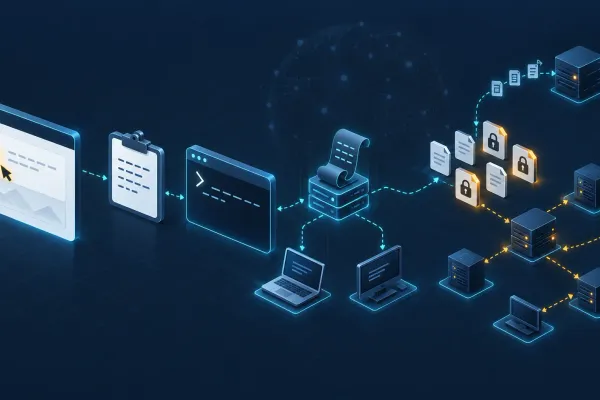
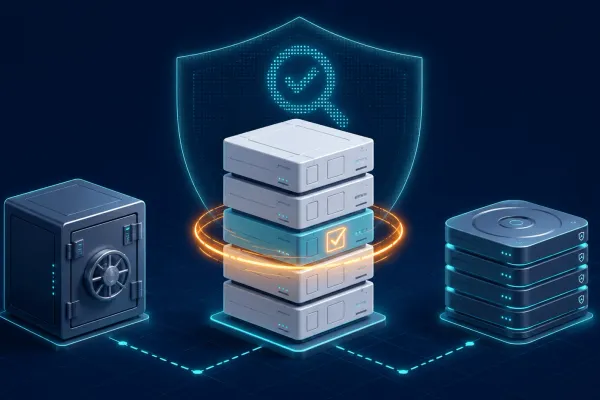
That’s why IBM, Veeam, and Elastio have partnered to deliver a proactive ransomware recovery assurance solution for VCF environments. Together, they offer not just secure backup and replication, but provable recovery. This integrated approach combines Veeam’s enterprise-grade backup, IBM’s immutable storage, and Elastio’s automated ransomware scanning and backup validation, giving organizations confidence that their recovery points are clean, bootable, and compliant.
Elastio seamlessly integrates into your VCF-based workloads, continuously scanning Veeam backups stored on IBM FlashSystem or object storage for signs of ransomware, encryption, and data corruption. Its AI-powered detection engine validates recoverability in an isolated, non-disruptive environment, producing detailed audit-ready reports to meet cyber insurance and regulatory standards like DORA, NYDFS, and NIST.
Whether you're preparing for compliance audits or bracing for the next cyberattack, this solution ensures your last line of defense is resilient, verified, and ready to restore.
Recover With Certainty
See how Elastio validates every backup across clouds and platforms to recover faster, cut downtime by 90%, and achieve 25x ROI.
Related Articles

Why Cyber Risk Spikes During Disasters and How to Build Resilience by Design Disaster recovery planning has traditionally focused on infrastructure. Systems fail, environments go offline, and IT teams restore operations as quickly as possible. But that model no longer reflects the reality organizations face today. In a recent webinar with NetApp and Elastio, Brittney Bell (NetApp), Mike Fiorella (NetApp), and Eswar Nalamuru (Elastio) explored an increasingly common pattern. When organizations experience a disruption, whether it is a natural disaster, infrastructure outage, or operational crisis, cyber risk often increases at the exact same time. Attackers understand that recovery periods create vulnerability. Systems are under pressure, teams are focused on restoration, and normal controls may be temporarily bypassed. The result is that disaster scenarios frequently become cyber incidents as well. This shift is forcing organizations to rethink how resilience is designed. Instead of treating disaster recovery and cybersecurity as separate functions, organizations are beginning to design recovery strategies that assume both types of events may occur simultaneously. When crises collide Brittney Bell described this challenge using the concept of a “polycrisis,” where multiple forms of disruption occur together rather than in isolation. Natural disasters alone can cause widespread operational impact. Infrastructure damage, power outages, and supply chain disruptions can force organizations into emergency recovery mode. But during those same moments, cyber attackers may also exploit the chaos. In fact, research shows that a large percentage of organizations affected by natural disasters also experience cyber attacks at the same time. Examples from recent history illustrate the scale of impact that disasters can have on infrastructure and digital operations: Major hurricanes that disrupted utilities and transportation infrastructure for weeksFlooding events that took critical systems offlineStorms that impacted data centers and shut down major digital services These events demonstrate why resilience cannot be limited to infrastructure recovery. Organizations must also assume that security threats will emerge when systems are already under stress. As Bell emphasized, resilience today is not just an IT concern. It is a business survival strategy. Disaster recovery and cyber recovery are not the same A key theme of the discussion was the difference between traditional disaster recovery and cyber recovery. Eswar Nalamuru explained that many organizations still approach both scenarios using the same framework. In practice, the two require very different assumptions. In a traditional disaster recovery scenario, the failure is usually clear. Systems may be offline or infrastructure may be unavailable, but organizations generally trust their backup data and recovery points. Cyber recovery introduces uncertainty. Security teams may not know whether attackers still have access to the environment, whether backups have been compromised, or which recovery point is actually safe to restore. This changes how recovery must be executed. Traditional disaster recovery prioritizes speed and service restoration. Cyber recovery requires precision. Teams must identify a clean recovery point and ensure that restoring data will not reintroduce the threat. That investigation step is what often slows recovery efforts during ransomware incidents. Without confidence in backup integrity, organizations may spend days or weeks determining which recovery point can be trusted. The three pillars of modern resilience The speakers outlined a simple framework that organizations can use to bridge the gap between disaster recovery and cyber recovery. Effective resilience strategies now require three capabilities working together. Availability Systems and data must remain accessible even during disruption. High availability architectures and geographic redundancy ensure that applications can continue operating if a primary location fails. Isolation and immutability Backup data must be protected from tampering or deletion. Features such as immutable storage and write-once policies help ensure attackers cannot alter or destroy recovery data. Integrity Organizations must be able to verify that their backups are clean and recoverable. Without validation, backups may contain encrypted or corrupted data that will fail during recovery. While many organizations already invest heavily in availability and immutability, integrity validation is often the missing layer. The storage foundation for resilient recovery Mike Fiorella discussed how many organizations are using Amazon FSx for NetApp ONTAP as a foundation for modern recovery strategies. FSx for NetApp ONTAP, often referred to as FSxN, is a managed storage service in AWS that incorporates NetApp’s ONTAP data management platform. Several capabilities make it well suited for resilient architectures. High availability deployments allow data to remain accessible even if a failure occurs within a single availability zone. Snapshot technology enables fast, space efficient point-in-time recovery of data. SnapMirror replication allows organizations to maintain synchronized copies of data in secondary AWS regions, enabling rapid failover if a primary region becomes unavailable. SnapLock adds immutability by allowing organizations to enforce write-once retention policies that prevent modification or deletion of protected data. Together, these capabilities allow organizations to create layered recovery strategies that include local snapshots, cross-region replication, and long-term protected backups. The integrity challenge in ransomware recovery Even with strong storage and backup protections in place, a critical question often remains unanswered during ransomware incidents. Is the data clean? Eswar Nalamuru explained that modern ransomware campaigns increasingly target backup infrastructure. If attackers can encrypt both production systems and backups, they remove the organization’s ability to recover independently. Attack techniques have also become far more sophisticated. Many modern ransomware variants use approaches designed to evade traditional detection tools. Examples include: Fileless attacks that operate entirely in memoryEncryption techniques that modify only portions of filesObfuscation techniques that preserve file metadataPolymorphic malware variants that continuously change signatures These techniques make it difficult for traditional security tools to detect encryption activity before damage occurs. To address this challenge, Elastio focuses on validating the integrity of backup data. Its platform scans stored data to detect ransomware encryption patterns and identify clean recovery points that organizations can safely restore. The goal is simple but critical. When a crisis occurs, recovery teams should know exactly where to recover from. Designing resilience for the real world The central lesson from the webinar is that recovery planning must evolve. Organizations can no longer assume that disasters and cyber attacks occur independently. Real world disruptions often combine both. Building resilient architectures requires integrating infrastructure availability, immutable data protection, and backup integrity validation into a single strategy. When these elements work together, organizations can recover faster and with greater confidence, even under the most challenging conditions. Join us for the “Building for the Breach” workshops To continue the conversation, Elastio, NetApp, and AWS are hosting a series of in-person workshops focused on ransomware resilience and recovery readiness. The Building for the Breach workshops explore how organizations can prepare for ransomware attacks before they occur. Each session includes: An executive discussion on modern cyber resilience strategiesA technical walkthrough of ransomware attack and recovery scenariosHands-on demonstrations of technologies that help validate recovery points and accelerate recovery Upcoming workshops are scheduled in cities including New York, Boston, Chicago, and Toronto. If you are responsible for disaster recovery, cybersecurity, or infrastructure resilience, these sessions provide an opportunity to see how modern recovery strategies work in practice and how organizations can strengthen their readiness for future disruptions. You can learn more about the workshops and upcoming dates through the Elastio events page.

The Rise of Off-Platform Encryption Modern ransomware attacks no longer follow a predictable script. Today’s adversaries are methodical and adaptive. They move laterally, identify valuable data, and increasingly attempt techniques designed to evade traditional detection controls. One scenario highlighted in recent threat reporting involves attackers transferring data from a storage array to an unmanaged host, encrypting it outside the production platform, and then writing the encrypted data back. The Illusion of Evasion On the surface, this appears clever. If encryption happens “off platform,” perhaps it avoids detection mechanisms tied to the storage system itself. Security teams may assume that because the encryption process did not execute within the storage environment, it leaves fewer indicators behind. That assumption does not hold up. Why Location Doesn’t Matter The critical point is that ransomware is not dangerous because of where encryption executes. It is dangerous because of what encryption does to data. When attackers copy files to an unmanaged system, encrypt them externally, and then reintroduce them into the environment, the storage platform may simply register file modifications. Blocks are written, files are updated, and nothing may appear operationally unusual at first glance. Encryption Leaves a Mark But the data itself has fundamentally changed. Elastio does not depend on observing the act of encryption. It does not require visibility into the unmanaged host. It does not rely on detecting specific attacker tools or processes. Instead, Elastio evaluates the integrity and structure of the data itself. When encrypted data is written back into a protected environment, it exhibits clear mathematical characteristics. There is high entropy, loss of expected file structure, destruction of known signatures, and transformation from meaningful structured content into statistically random output. Those changes are measurable and immediately identifiable. In an enterprise cloud environment, when encrypted files are reintroduced after off-platform manipulation, Elastio detects the anomaly as soon as the altered data is analyzed. The system recognizes that the file state no longer matches expected structural norms. Compromised data is flagged right away. Clean recovery points are preserved and confidence in restoration remains intact. Protecting Recovery Before It’s Too Late This matters because backup compromise is now a primary objective of modern ransomware groups. Attackers understand that if they can corrupt recovery data, they dramatically increase pressure to pay. Off-platform encryption is one way they attempt to quietly poison what organizations believe are safe restore points. Elastio prevents that silent corruption from spreading undetected. The architectural advantage is straightforward. Elastio focuses on validating the recoverability and integrity of backup data continuously. It does not chase attacker techniques, which evolve constantly. It analyzes outcomes, which cannot hide. Even if encryption occurs halfway around the world on infrastructure the organization never sees, the reintroduced data cannot disguise its cryptographic fingerprint. The mathematical properties of encryption are universal. They do not depend on vendor, platform, or geography. As soon as that altered data touches protected storage, the signal is present. Attackers may change tools, infrastructure, and tradecraft. They may leverage unmanaged hosts, cloud workloads, or insider access. They may try to fragment, stagger, or throttle their activity to avoid behavioral alarms. None of that changes what encrypted data looks like when examined structurally. Verification Is the Advantage That is why outcome-based detection matters. By analyzing the data itself rather than the surrounding activity, Elastio removes the blind spots attackers attempt to exploit. Off-platform encryption is simply another variation of the same fundamental tactic: render data unusable while attempting to evade detection. When encrypted content re-enters the environment, it is seen immediately for what it is. In cybersecurity, assumptions create risk. Verification creates resilience.

The False Security of Checked BoxesIn the high-stakes world of cyber-recovery, there is a dangerous assumption that "detection" is a binary state, either you have it or you don’t. Most backup vendors have checked the box by offering anomaly and entropy-based monitoring. But as a CISO who has spent over a decade in regulated industries, I’ve learned that a check-box control is often worse than no control at all. It creates a false sense of security while delivering a signal so noisy and inaccurate that it’s practically unusable. The Inaccuracy Problem: Inference Is Not Evidence The core issue with the ransomware detection provided by backup vendors isn’t just where it happens; it’s how it happens. These tools rely on statistical inference rather than data evidence: Anomaly Detection: Monitors for “unusual” behavior, like a sudden spike in changed blocks or a deviation in backup window duration.Entropy Detection: Measures data randomness to infer encryption. In a modern enterprise, data is naturally “noisy.” Compressed database logs, encrypted video files, and standard application updates all register as anomalies or high-entropy events. Because these tools cannot distinguish between a legitimate .zip file and a ransomware-encrypted .docx, they produce a constant stream of false positives. Figure 1: Modern ransomware (red) operates below the statistical noise floor while legitimate enterprise data generates constant false-positive noise. Elastio detects threats through structural content inspection, independent of entropy. For a SOC team, this noise is toxic. When a tool is consistently inaccurate, the human response is predictable: the alerts are muted, tuned down, or ignored. If your “last line of defense” relies on a signal that your team doesn’t trust, you don’t actually have a defense. Beyond the “Big Bang”: The Rise of Evasive Encryption Current anomaly and entropy tools were designed for the "Big Bang" encryption events of years past. As of 2026, threat actors have evolved well beyond this model, with variants including LockFile specifically engineered to stay below the statistical noise floor using intermittent encryption. Intermittent Encryption: Encrypting every other 4KB block so the overall entropy change remains negligible.Low-Entropy Encryption: Using specialized schemes that mimic the statistical signature of benign, compressed data.Selective Corruption: Attacking only file headers or metadata while leaving the bulk of the file statistically “normal.” Against these techniques, a statistical guess is useless. You need a Data Integrity Control that performs deep content inspection to validate the actual structure of the data, not just its randomness. Mapping Integrity to the Resilience Lifecycle A high-fidelity integrity engine, like Elastio, provides the same level of accuracy regardless of where it is deployed. However, for a CISO, the location of that check is a strategic decision based on the Resilience Lifecycle: The Backup Layer: Validating integrity here is non-negotiable. It ensures that when you hit “restore,” you aren’t re-injecting corrupted data into your environment and extending downtime.The Production Layer (VMs, Buckets, Filers): For mission-critical data, waiting for the backup cycle to run is a luxury we can’t afford. Detecting corruption at the source, in your production VMs, S3 buckets, or filers, is about minimizing the blast radius. Data integrity validation serves different purposes depending on where it is applied in the resilience lifecycle. Scanning production data across VMs, filers, and object stores is the most effective way to minimize blast radius and prevent spread, because it detects corruption before it propagates downstream. When production data cannot be scanned due to security boundaries, operational constraints, or tenancy limitations, snapshots and replicas become the practical control point for achieving the same outcome. In this model, snapshot integrity analysis is not additive to production scanning; it is a substitute. Both serve the same objective: early detection and containment before corruption reaches backups or immutable storage. The CISO’s Bottom Line: Proving vs. Guessing Resilience is measured by the speed and certainty of recovery. Anomaly and entropy-based detection fail on both counts: they are too inaccurate to provide certainty and too late to provide speed. True resilience requires moving from statistical inference to data integrity validation. Whether validating backups to prove recoverability or monitoring production data to prevent spread, the objective is the same: replace guessing with proof. In regulated environments, “recovery is safe” is the only defensible statement a CISO can make to the board. The ability to detect these advanced threats early is the difference between being able to ensure fast recovery versus a ransomware event that results in devastating downtime, data loss, and financial impact.