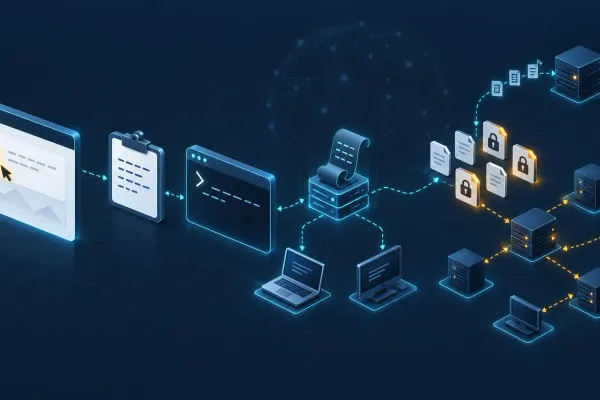
The Democratization of Endpoint Defense Bypass
There was a time when bypassing endpoint defenses like Windows Defender was considered a niche capability, reserved for elite red teams, advanced threat actors, or highly specialized researchers. That time has passed. Today, bypass techniques are not only widely documented, they are being actively taught, operationalized, and scaled in ways that should give both security leaders and policymakers pause.
How Modern Endpoint Protection Is Being Circumvented
Modern endpoint protection platforms such as Microsoft Defender rely heavily on behavioral detection and interfaces like the Anti-Malware Scan Interface (AMSI) to identify malicious activity. In theory, these systems provide layered visibility into both known and unknown threats. In practice, however, attackers have adapted. Rather than attempting to defeat detection outright, many now focus on sidestepping it entirely.
Techniques such as in-memory execution, obfuscation, and the abuse of legitimate system tools have become standard approaches for avoiding scrutiny. What was once considered advanced tradecraft is now widely understood and, more importantly, repeatable.
From Underground Knowledge to Mainstream Curriculum
The most significant shift is not purely technical, but structural. Bypass knowledge is no longer confined to underground forums or tightly controlled research communities. It is being democratized.
Training platforms, professional courses, and widely accessible labs are now teaching the mechanics of evasion as part of mainstream cybersecurity education. A clear example is the LinkedIn Learning course “Defeating Windows Defender,” which walks through how Defender operates, how it detects threats, and how those mechanisms can be bypassed in practice.
This reflects a broader reality: evasion is no longer treated as an edge case, but as a core competency.
The Scaling Problem: When Bypass Becomes Repeatable
This shift has profound implications. When bypass techniques become structured learning material, they become scalable. They can be taught, repeated, refined, and integrated into standard operating procedures.
This fundamentally changes the balance between attackers and defenders. Security teams must account for an ever-expanding set of techniques, while adversaries can focus on identifying and executing a single successful bypass. The asymmetry has always existed, but the barrier to entry is now significantly lower.
Studying Security Tools as Targets
Equally important is the way attackers are approaching security tools themselves. Endpoint protection is no longer viewed as a black box, but as a system to be studied, tested, and ultimately manipulated.
Detection logic is analyzed, blind spots are identified, and controls are treated much like software targets in their own right. This methodical approach, combined with the growing availability of training resources, is accelerating the pace at which bypass techniques evolve.
Why Prevention Alone Is No Longer Enough
None of this suggests that tools like Microsoft Defender are ineffective. They remain a critical component of any modern security architecture. However, it does underscore a necessary shift in mindset.
Organizations can no longer assume that prevention alone will hold. They must operate under the assumption that controls can and will be bypassed, and that some level of adversary activity may go undetected for a period of time.
The Shift Toward Resilience
The implication is clear: resilience must extend beyond prevention. Detection, response, and containment capabilities are no longer secondary considerations, but central pillars of security strategy.
Visibility across endpoints, identity systems, and networks becomes essential, as does the ability to respond quickly when something inevitably slips through.
When Bypass Becomes the Norm
The real concern is not that bypass techniques exist. They always have. The concern is that they are now accessible, repeatable, and teachable at scale.
When bypass becomes curriculum, it stops being exceptional and becomes normal. And once that happens, the entire defensive posture must evolve accordingly.
The Blurring Line Between Testing and Threat Activity
A second-order effect of this shift is the normalization of adversary tradecraft within legitimate environments. Techniques that were once clear indicators of malicious behavior are increasingly indistinguishable from sanctioned testing or training activity.
This creates challenges not only for detection systems, but also for governance and oversight, as organizations struggle to differentiate between benign and hostile use of the same methods. The line between offensive research and operational threat activity continues to blur.
The Changing Talent Landscape
There is also a growing talent dynamic that cannot be ignored. As more individuals are trained in evasion techniques early in their careers, expectations around what constitutes “baseline” knowledge in cybersecurity are changing.
This raises the floor for defenders, but it also raises the ceiling for attackers entering the field. In effect, the industry is producing professionals who are equally capable of strengthening defenses and exploiting their weaknesses.
The Reactive Cycle Facing Security Vendors
At the same time, vendors face increasing pressure to respond in near real time to newly disclosed bypass techniques. This creates a reactive cycle where defensive updates follow public research and training content, rather than getting ahead of it.
While this cycle has always existed to some degree, the speed and visibility of modern information sharing have accelerated it dramatically. The result is a more dynamic but also more volatile defensive landscape.
Adapting to an Expected Reality
Ultimately, the question is not whether bypass techniques will continue to evolve, but how organizations choose to adapt.
Treating evasion as an anomaly is no longer viable. It must be treated as an expected condition within any environment. Organizations that embrace this reality and build for it will be better positioned to manage risk, while those that rely too heavily on prevention alone will find themselves increasingly exposed.