City of Dallas Ransomware Incident Report
Author
Naj Husain
Date Published

Dr. Srinidhi Varadarajan, Chief Scientist, Elastio
ITS Risk Management, Security and Compliance Services Report, Sep. 2023 Synopsis
The following is my synopsis of an excellent report from the City of Dallas ITS Risk Management on a significant ransomware attack this year. In contrast, most such incidents involve private entities with buried analyses that are heard through the grapevine. The rest of the article breaks down the phases of the spread. Please note all sections below are taken verbatim from their report.
Threat Actor: Royal
Statistics
In the year 2022, ransomware victimized over 70 percent of organizations, marking a surge compared to the preceding five years and establishing the highest recorded proportion to date. The incidence of ransomware exhibited a noteworthy annual growth rate of 13% during 2022, surpassing the cumulative increase of the preceding five years. Furthermore, the number of public ransomware victims escalated by 38% when compared to the initial quarter of 2023 and demonstrated an astounding 100% surge from the second quarter of 2022. This denotes a substantial 75 percent upswing in the mean count of monthly attacks in the United States between the initial and latter halves of the preceding 12-month period.
Spread Phase
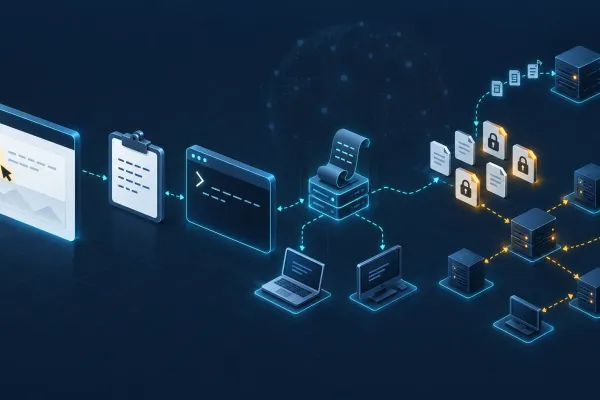
The initial entry point was established through the utilization of [a] service account that connected to a server. Leveraging this initial access, the threat actor cleverly navigated the internal infrastructure of the City by exploiting legitimate third-party remote management utilities. The Royal group constructed what is typically known as “Beacons” using remote management utilities and legitimate pen-testing technologies to traverse the City’s internal network. These actions provided staging for Royal to exfiltrate an estimated 1.169 TB of data through the initial impacted server. In addition to data exfiltration, the Threat Actor’s credential harvesting techniques provided a list of users, accounts, and devices.
Timeline of Activities
Impact
As required under federal law and using different metrics for the inclusion of individuals, the Department of Health and Human Services (HHS) was notified that the Sensitive Personal Information (SPI) and Protected Health Information (PHI) of 30,253 individuals were potentially exposed by the activities of Royal. The OAG’s website indicated that personal information such as names, addresses, social security information, health information, health insurance information, and other such information was exposed by Royal.
To date, The Dallas City Council has approved a budget of $8.5 million in computer-based interdiction, mitigation, recovery, and restoration efforts directly tied to the Royal ransomware attack. The City has dedicated a total of 39,590 hours towards the comprehensive remediation effort, of which ITS methodically documented 14,158 hours.
Recovery
Recovery endeavors necessitated a temporary pause due to the incomplete neutralization of the malicious executables through EDR and its ability to propagate throughout the network ecosystem.
In the final analysis, it was ascertained that the event led to the impairment of 230 servers, necessitating comprehensive endeavors for their complete restoration and recovery through available backups. Among these affected servers, the City successfully retired more than 100 surplus servers [there was some goodness here out of all this], hosting outdated applications, unsupported operating systems, or deemed non-essential for crucial municipal services. The cumulative count of 1,398 endpoint devices went through reconstruction directly due to the effects of the Royal ransomware infection.
About Elastio
Elastio detects and precisely identifies ransomware in your data and assures rapid post-attack recovery. Our data resilience platform protects against cyber attacks when traditional cloud security measures fail. Elastio’s agentless deep file inspection continuously monitors business-critical data to identify threats and enable quick response to compromises and infected files. Elastio provides best-in-class application protection and recovery and delivers immediate time-to-value. For more information, visit www.elastio.com.
Photo by Christopher Burns on Unsplash
Recover With Certainty
See how Elastio validates every backup across clouds and platforms to recover faster, cut downtime by 90%, and achieve 25x ROI.
Related Articles

Cloud ransomware incidents rarely begin with visible disruption. More often, they unfold quietly, long before an alert is triggered or a system fails. By the time incident response teams are engaged, organizations have usually already taken decisive action. Workloads are isolated. Instances are terminated. Cloud dashboards show unusual activity. Executives, legal counsel, and communications teams are already involved. And very quickly, one question dominates every discussion. What can we restore that we actually trust? That question exposes a critical gap in many cloud-native resilience strategies. Most organizations have backups. Many have immutable storage, cross-region replication, and locked vaults. These controls are aligned with cloud provider best practices and availability frameworks. Yet during ransomware recovery, those same organizations often cannot confidently determine which recovery point is clean. Cloud doesn’t remove ransomware risk — it relocates it This is not a failure of effort. It is a consequence of how cloud architectures shift risk. Cloud-native environments have dramatically improved the security posture of compute. Infrastructure is ephemeral. Servers are no longer repaired; they are replaced. Containers and instances are designed to be disposable. From a defensive standpoint, this reduces persistence at the infrastructure layer and limits traditional malware dwell time. However, cloud migration does not remove ransomware risk. It relocates it. Persistent storage remains long-lived, highly automated, and deeply trusted. Object stores, block snapshots, backups, and replicas are designed to survive everything else. Modern ransomware campaigns increasingly target this persistence layer, not the compute that accesses it. Attackers don’t need malware — they need credentials Industry investigations consistently support this pattern. Mandiant, Verizon DBIR, and other threat intelligence sources report that credential compromise and identity abuse are now among the most common initial access vectors in cloud incidents. Once attackers obtain valid credentials, they can operate entirely through native cloud APIs, often without deploying custom malware or triggering endpoint-based detections. From an operational standpoint, these actions appear legitimate. Data is written, versions are created, snapshots are taken, and replication occurs as designed. The cloud platform faithfully records and preserves state, regardless of whether that state is healthy or compromised. This is where many organizations encounter an uncomfortable reality during incident response. Immutability is not integrity Immutability ensures that data cannot be deleted or altered after it is written. It does not validate whether the data was already encrypted, corrupted, or poisoned at the time it was captured. Cloud-native durability and availability controls were never designed to answer the question incident responders care about most: whether stored data can be trusted for recovery. In ransomware cases, incident response teams repeatedly observe the same failure mode. Attackers encrypt or corrupt production data, often gradually, using authorized access. Automated backup systems snapshot that corrupted state. Replication propagates it to secondary regions. Vault locks seal it permanently. The organization has not lost its backups. It has preserved the compromised data exactly as designed. Backup isolation alone is not enough This dynamic is particularly dangerous in cloud environments because it can occur without malware, without infrastructure compromise, and without violating immutability controls. CISA and NIST have both explicitly warned that backup isolation and retention alone are insufficient if integrity is not verified. Availability testing does not guarantee recoverability. Replication can accelerate the blast radius Replication further amplifies the impact. Cross-region architectures prioritize recovery point objectives and automation speed. When data changes in a primary region, those changes are immediately propagated to disaster recovery environments. If the change is ransomware-induced corruption, replication accelerates the blast radius rather than containing it. From the incident response perspective, this creates a critical bottleneck that is often misunderstood. The hardest part of recovery is deciding what to restore The hardest part of recovery is not rebuilding infrastructure. Cloud platforms make redeployment fast and repeatable. Entire environments can be recreated in hours. The hardest part is deciding what to restore. Without integrity validation, teams are forced into manual forensic processes under extreme pressure. Snapshots are mounted one by one. Logs are reviewed. Timelines are debated. Restore attempts become experiments. Every decision carries risk, and every delay compounds business impact. This is why ransomware recovery frequently takes days or weeks even when backups exist. Boards don’t ask “Do we have backups?” Boards do not ask whether backups are available. They ask which recovery point is the last known clean state. Without objective integrity assurance, that question cannot be answered deterministically. This uncertainty is not incidental. It is central to how modern ransomware creates leverage. Attackers understand that corrupting trust in recovery systems can be as effective as destroying systems outright. What incident response teams wish you had is certainty What incident response teams consistently wish organizations had before an incident is not more backups, but more certainty. The ability to prove, not assume, that recovery data is clean. Evidence that restoration decisions are based on validated integrity rather than best guesses made under pressure. Integrity assurance is the missing control This is where integrity assurance becomes the missing control in many cloud strategies. NIST CSF explicitly calls for verification of backup integrity as part of the Recover function. Yet most cloud-native architectures stop at durability and immutability. When integrity validation is in place, recovery changes fundamentally. Organizations can identify the last known clean recovery point ahead of time. Recovery decisions become faster, safer, and defensible. Executive and regulatory confidence improves because actions are supported by evidence. From an incident response standpoint, the difference is stark. One scenario is prolonged uncertainty and escalating risk. The other is controlled, confident recovery. Resilience is proving trust, not storing data Cloud-native architecture is powerful, but ransomware has adapted to it. In today’s threat landscape, resilience is no longer defined by whether data exists somewhere in the cloud. It is defined by whether an organization can prove that the data it restores is trustworthy. That is what incident response teams see after cloud ransomware. Not missing backups, but missing certainty. Certainty is the foundation of recovery And in modern cloud environments, certainty is the foundation of recovery.

CMORG’s Data Vaulting Guidance: Integrity Validation Is Now a Core Requirement In January 2025, the Cross Market Operational Resilience Group (CMORG) published Cloud-Hosted Data Vaulting: Good Practice Guidance. It is a timely and important contribution to the operational resilience of the UK financial sector. CMORG deserves recognition for treating recovery architecture as a priority, not a future initiative. In financial services, the consequences of a cyber event extend well beyond a single institution. When critical systems are disrupted and recovery fails, the impact can cascade across customers, counterparties, and markets. The broader issue is confidence. A high-profile failure to recover can create damage that reaches far beyond the affected firm. This is why CMORG’s cross-industry collaboration matters. It reflects an understanding that resilience is a shared responsibility. Important Theme: Integrity Validation The guidance does a strong job outlining the principles of cloud-hosted vaulting, including isolation, immutability, access control, and key management. These are necessary design elements for protecting recovery data against compromise. But a highly significant element of the document is its emphasis on integrity validation as a core requirement. CMORG Foundation Principle #11 states: “The data vault solution must have the ability to run analytics against its objects to check integrity and for any anomalies without executing the object. Integrity checks must be done prior to securing the data, doing it post will not ensure recovery of the original data or the service that the data supported.” This is a critical point. Immutability can prevent changes after data is stored, but it cannot ensure that the data was clean and recoverable at the time it was vaulted. If compromised data is written into an immutable environment, it becomes a permanently protected failure point. Integrity validation must occur before data becomes the organization’s final recovery source of truth. CMORG Directly Addresses the Risk of Vaulting Corrupted Data CMORG reinforces this reality in Annex A, Use Case #2, which addresses data corruption events: “For this use case when data is ‘damaged’ or has been manipulated having the data vaulted would not help, since the vaulted data would have backed up the ‘damaged’ data. This is where one would need error detection and data integrity checks either via the application or via the backup product.” This is one of the most important observations in the document. Vaulting can provide secure retention and isolation, but it cannot determine whether the data entering the vault is trustworthy. Without integrity controls, vaulting can unintentionally preserve compromised recovery points. The Threat Model Has Changed The guidance aligns with what many organizations are experiencing in practice. Cyber-attacks are no longer limited to fast encryption events. Attackers increasingly focus on compromising recovery, degrading integrity over time, and targeting backups and recovery infrastructure. These attacks may involve selective encryption, gradual corruption, manipulation of critical datasets, or compromise of backup management systems prior to detonation. In many cases, the goal is to eliminate confidence in restoration and increase leverage during extortion. The longer these attacks go undetected, the more likely compromised data is replicated across snapshots, backups, vaults, and long-term retention copies. At that point, recovery becomes uncertain and time-consuming, even if recovery infrastructure remains available. Why Integrity Scanning Must Happen Before Data Is Secured CMORG’s point about validating integrity before data is secured is particularly important. Detection timing directly affects recovery outcomes. Early detection preserves clean recovery points and reduces the scope of failed recovery points. Late detection increases the likelihood that all available recovery copies contain the same corruption or compromise. This is why Elastio’s approach is focused on integrity validation of data before it becomes the foundation of recovery. Organizations need a way to identify ransomware encryption patterns and corruption within data early for recovery to be predictable and defensible. A Meaningful Step Forward for the Industry CMORG’s cloud-hosted data vaulting guidance represents an important milestone. It reflects a mature view of resilience that recognizes vaulting and immutability as foundational, but incomplete without integrity validation. The integrity of data must be treated as a primary control. CMORG is correct to call this out. It is one of the clearest statements published by an industry body on what effective cyber vaulting must include to support real recovery.

Closing the Data Integrity Control Gap In 2025, the cybersecurity narrative shifted from protection to provable resilience. The reason? A staggering 333% surge in "Hunter-Killer" malware threats designed not just to evade your security stack, but to systematically dismantle it. For CISOs and CTOs in regulated industries, this isn't just a technical hurdle; it is a Material Risk that traditional recovery frameworks are failing to address. The Hunter-Killer Era: Blinding the Frontline The Picus Red Report 2024 identified that one out of every four malware samples now includes "Hunter-Killer" functionality. These tools, like EDRKillShifter, target the kernel-level "callbacks" that EDR and Antivirus rely on to monitor your environment. The Result: Your dashboard shows a "Green" status, while the adversary is silently corrupting your production data. This creates a Recovery Blind Spot that traditional, agent-based controls cannot see. The Material Impact: Unquantifiable Downtime When your primary defense is blinded, the "dwell time", the period an attacker sits in your network, balloons to a median of 11–26 days. In a regulated environment, this dwell time is a liability engine: The Poisoned Backup: Ransomware dwells long enough to be replicated into your "immutable" vaults.The Forensic Gridlock: Organizations spend an average of 24 days in downtime manually hunting for a "clean" recovery point.The Disclosure Clock: Under current SEC mandates, you have four days to determine the materiality of an incident. If you can’t prove your data integrity, you can’t accurately disclose your risk. Agentless Sovereignty: The Missing Control Elastio addresses the Data Integrity Gap by sitting outside the line of fire. By moving the validation layer from the compromised OS to the storage layer, we provide the only independent source of truth. The Control GapThe Elastio OutcomeAgent FragilityAgentless Sovereignty: Sitting out-of-band, Elastio is invisible to kernel-level "Hunter-Killer" malware.Trust BlindnessIndependent Truth: We validate data integrity directly from storage, ensuring recovery points are clean before you restore.Forensic LagMean Time to Clean Recovery (MTCR): Pinpoint the exact second of integrity loss to slash downtime from weeks to minutes. References & Sources GuidePoint Security GRIT 2026 Report: 58% year-over-year increase in ransomware victims.Picus Security Red Report 2024: 333% surge in Hunter-Killer malware targeting defensive systems.ESET Research - EDRKillShifter Analysis: Technical deep-dive into RansomHub’s custom EDR killer and BYOVD tactics.Mandiant M-Trends 2025: Median dwell time increases to 11 days; 57% of breaches notified by external sources.Pure Storage/Halcyon/RansomwareHelp: Average ransomware downtime recorded at 24 days across multiple industries in 2025.Cybereason True Cost to Business: 80% of organizations who pay a ransom are hit a second time.