Best Practices for Ransomware-Resilient Disaster Recovery
Author
Todd Fredrick
Date Published

AWS Backup Bunker Vault and Elastio Ransomware Recovery Assurance
Summary: Bunker vaults provide secure, immutable storage, but they don’t guarantee backups are clean or recoverable from hidden ransomware or corruption. Elastio Ransomware Recovery Assurance Platform (Elastio Platform) integrates directly with AWS Backup to proactively validate backup integrity before or after entering bunker vaults.
Rising Need for Recovery Readiness
Organizations today are expected to maintain continuous service availability, yet the risks of operational disruptions are escalating due to sophisticated cyber threats and system failures. To mitigate these risks, industries across sectors, including government, financial services, and healthcare are strengthening their disaster recovery strategies to prioritize cyber resilience.
Many adopt a Minimum Viable Company (MVC) approach, which prioritizes what data is essential to the business and should be prioritized for maximum protection to enable rapid recovery after an incident.
In a Zero-Trust security model, maximum protection means ensuring that backups remain immutable and isolated from potential threats.
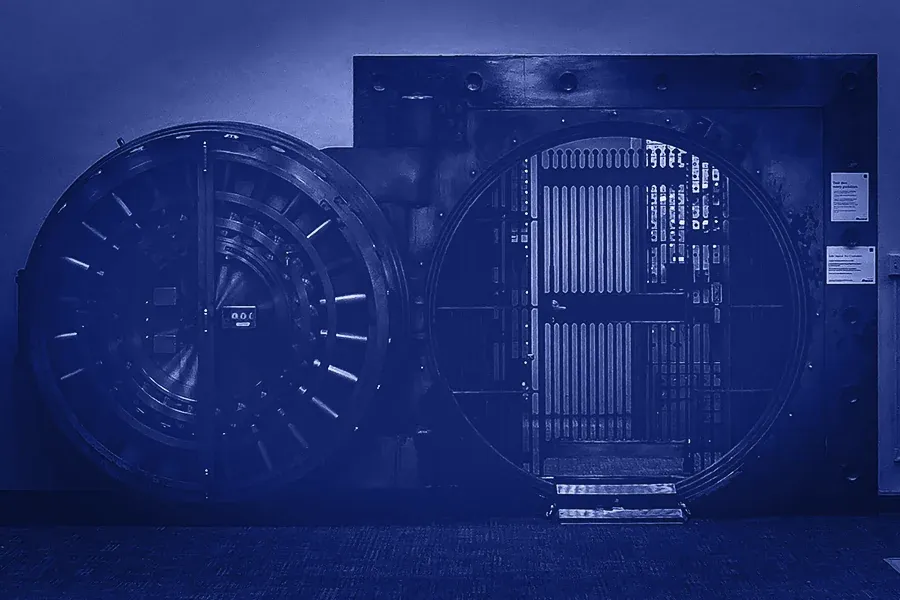
One of the effective strategies is using a centralized “Bunker Account”—a dedicated AWS account where immutable backups are stored in a secure vault outside production systems.
The Logically Air-Gapped Vault is a recent AWS Backup feature which provides additional safeguards such as AWS-managed encryption keys and the ability to securely share vault access for flexible and rapid recovery across accounts.
A Critical Risk in Bunker Vaults: What if the Data in the Backups is Compromised?
The entire premise of an immutable backup vault strategy is that these critical backups will be used for disaster recovery.
But this assumption comes with a critical risk factor:
Do you know the backup data in your bunker vault is actually recoverable?
Simply storing immutable backups in a vault does not guarantee they are clean and usable. Cybercriminals infiltrate environments stealthily, embedding ransomware that remains undetected and get copied into backups, creating “a hidden threat inside” the backup itself.
Businesses often don’t realize their backups are compromised until they attempt to restore them after an attack—when it’s too late. Even non-cyber risks, such as file system corruption, can render backups useless.
You do not want to invest in a highly secure, air-gapped backup vault strategy, only to discover after an attack that your backups were compromised upon creation.
This is not hypothetical – it happens to businesses every day. Read this Elastio Platform customer case study to learn more about how a company spent a week searching for a clean backup after a cyber attack, only to discover that their most recent clean backup was a month old.
This critical risk is why AWS Backup recommends Elastio Platform as a key component of a robust cyber recovery strategy.
Elastio Platform assures that backups stored in AWS Bunker Vaults are recoverable by proactively validating data integrity at scale, like an automated recovery test.
How Elastio Platform Validates AWS Bunker Vault Strategy
Elastio integrates directly with AWS Backup, allowing organizations to validate backups either through:
- Proactive Validation Before Data Enters the Vault – Scan backups before they are stored in the bunker vault to verify they are free of threats and corruption.
- Recovery Testing Within the Vault – Validate backup integrity by scanning existing data backups within the air-gapped vault via AWS Restore Test.
Elastio Platform supports AWS Backup Bunker Accounts and integrates with AWS Backup Logically Air-Gapped Vault.
What Threats Are Hiding in Your Backups? Here’s What Elastio Platform Detects
Elastio Platform performs agentless deep file-level inspection of every backup, detecting threats that could compromise recovery without performance overhead.
Elastio Platform inspects for:
- Zero-Day Ransomware Encryption – Uses machine learning-driven statistical, deterministic, and behavioral models to detect unknown and evolving ransomware with 99.99% accuracy.
- Insider Threats – Identifies unauthorized encryption, which may indicate insider-driven attacks.
- Signatures – Detects pre-detonation ransomware before it escalates.
- File System Integrity Issues – Flags corrupt files and structural inconsistencies that could make restoration impossible.
Conclusion: Make Data Integrity Validation a Core Part of Your Disaster Recovery Strategy
Building a secure backup and disaster recovery strategy goes beyond simply storing backups in an immutable vault—it requires confidence that your backups are clean, uncorrupted, and fully recoverable.
AWS recommends implementing Elastio Platform’s data integrity validation into backup workflows to ensure recoverability and resilience.
(Learn more at the 2024 AWS re:Invent presentation on Building Resilience Against Ransomware Using AWS Backup here.)
Elastio Platform makes this process seamless, providing proactive detection and validation so that organizations never have to question whether their backups will work when they need them most.
If you're exploring a backup and disaster recovery project, make sure data integrity validation is part of the process.
Additional Materials
Learn more about AWS Backup and Elastio integration: Elastio Integrates with AWS Backup for Secure Backups to Enhance Ransomware Defense | AWS Partner Network (APN) Blog
AWS re:Invent 2024: Building resilience against ransomware using AWS Backup (STG409) – YouTube
See how Elastio Platform works with AWS Backup Logically Air-Gapped Vault:Building Ransomware Resilience with Elastio and AWS Backup Logically Air-Gapped Vault
Recover With Certainty
See how Elastio validates every backup across clouds and platforms to recover faster, cut downtime by 90%, and achieve 25x ROI.
Related Articles

AI-Ready & Ransomware-Proof FSx for NetApp ONTAP Amazon FSx for NetApp ONTAP (FSxN) has become the gold standard for high-performance cloud storage, combining the agility of AWS with the data management power of NetApp. Today, this infrastructure is more critical than ever. As unstructured data volumes explode and enterprises race to feed Generative AI models, FSxN has evolved into the engine room for innovation. It holds the massive datasets that fuel your AI insights and drive business logic. You cannot build trusted AI on unverified data FSxN delivers the trusted, high-performance platform your enterprise relies on. But true trust requires more than uptime—it requires integrity. As enterprise architectures evolve, so do the threats targeting them. The sheer scale of unstructured data creates a massive blind spot where ransomware can hide, silently corrupting data over weeks. If the data residing on your trusted storage is compromised, your AI models are being trained on poisoned assets. The Imperative: Verified Data for Trusted AI Today, Elastio is introducing comprehensive Ransomware Recovery Assurance for Amazon FSx for NetApp ONTAP. We now provide a layered defense that validates the integrity of the data within your primary volumes, SnapMirror replicas, and AWS Backups, ensuring that your storage is not just available, but provably clean. The Three-Tier Defense for FSxN To understand where Elastio fits, we must look at the modern FSxN protection architecture. A resilient implementation typically relies on three layers : Primary Filer: Your active, high-performance workload.SnapMirror Replica: A near-real-time, read-only copy used for disaster recovery with low RPOs (e.g., 5 minutes).AWS Backup: A daily recovery point for long-term retention and compliance. Until now, verified recoverability across these layers was a blind spot. Elastio eliminates that uncertainty by integrating with the entire chain to validate data integrity before a crisis occurs. The Risk of Silent Corruption Ransomware attacks frequently begin subtly, bypassing perimeter defenses and modifying data blocks without triggering immediate alerts. If these corrupted blocks are replicated to your SnapMirror destination or archived into your AWS Backup vault, you aren't preserving your business—you are preserving the attack. Just having backups is not enough. To ensure resilience, you must answer three questions about your recovery points : Are they safe?Are they intact?Are they recoverable? Introducing Elastio Recovery Assurance for FSxN Elastio delivers agentless, automated verification for FSxN environments. Our platform connects to your infrastructure to perform deep-file inspection, providing : Behavioral Ransomware Detection: We identify encryption patterns that signature-based tools miss, including slow-rolling and obfuscated encryption.Insider Threat Detection: We detect malicious tampering or unauthorized encryption driven by compromised credentials.Corruption Validation: We identify unexpected data corruption that could render a backup unusable during a restore. This coverage spans the entire lifecycle. Elastio scans your SnapMirror replicas for immediate RPO validation and utilizes AWS Restore Testing to validate your AWS Backups without rehydrating production data. Complementing NetApp’s Native Defenses Elastio is designed to work with your existing security stack, not replace it. NetApp’s native Autonomous Ransomware Protection (ARP) is an excellent first line of defense, monitoring your production environment for suspicious activity in real-time. Elastio complements ARP by operating beyond the production path. We focus on the recovery chain, performing deep-dive analysis on your backups and replicas. If ARP flags a potential threat in production, Elastio allows you to instantly identify which historical recovery point is clean, verifiable, and safe to restore . Compliance: From "Prevention" to "Proof" Regulatory pressure is shifting. Frameworks like DORA, NYDFS, HIPAA, and PCI-DSS are moving away from simple backup retention mandates toward requirements for demonstrable recovery integrity. Auditors and cyber insurers no longer accept "we have backups" as an answer. They require proof that those backups can be restored. Elastio automates this reporting, providing a validated inventory of clean snapshots that satisfies the most stringent compliance and risk requirements. Recommended Architecture for Provable Recovery To achieve maximum resilience with FSxN, we recommend the following layered approach : Replicate: Use SnapMirror to maintain a secondary copy with a 5-minute RPO.Retain: Use AWS Backup to enforce retention policies.Validate:Run Elastio Hourly Scans on SnapMirror replicas to catch infection early.Run Elastio Restore Tests monthly on AWS Backups to verify your vault. Conclusion In the current threat landscape, ransomware is not a matter of if, but when. Your data is only protected if it can be recovered. With Elastio’s new support for Amazon FSx for NetApp ONTAP, you can move beyond checking a backup box and gain true recovery assurance. In just minutes per TB, you will know if your data is clean or compromised, and be ready to recover with confidence. 3 Key Takeaways AI Integrity Requires Clean Data As FSxN drives generative AI and unstructured data growth, silent corruption becomes a critical risk. Elastio prevents "poisoned" datasets by detecting corruption inside the storage layer.End-to-End Validation Elastio secures the entire FSxN lifecycle, providing deep inspection and clean recovery verification for primary volumes, SnapMirror replicas, and AWS Backups.The "Production and Recovery" Defense Elastio operates outside the production path to complement NetApp’s Autonomous Ransomware Protection (ARP), validating snapshots to ensure you always have a safe place to restore from.

The Immutability Blind Spot AWS Logically Air-Gapped (LAG) Vaults are a massive leap forward for cloud recovery assurance. They provide the isolation and immutability enterprises need to survive catastrophic cyber events. But immutability has a dangerous blind spot: it doesn’t distinguish between clean data and corrupted data. If ransomware encrypts your production environment and those changes replicate to your backup snapshots before they are moved to the vault, you are simply locking the malware into your gold-standard recovery archive. You aren’t preserving your business; you’re preserving the attack. Today, Elastio has closed that gap. We introduced a new integration with AWS LAG that ensures only provably clean recovery points enter your immutable vault. By combining our deep-file inspection with a new Automated Quarantine Workflow, we prevent infected data from polluting your recovery environment. The Risk: "Immutable Garbage In, Immutable Garbage Out" The core principle of modern resilience is simple: Immutable storage isn't enough—data integrity must be proven. Ransomware attackers are evolving. They no longer just encrypt production data; they target backup catalogs and leverage "slow burn" encryption strategies to corrupt snapshots over weeks or months. Standard signature-based detection tools often miss these storage-layer attacks because they are looking for executable files, not the mathematical signs of entropy and corruption within the data blocks themselves. If you copy an infected recovery point into an AWS LAG Vault and lock it with a compliance retention policy, you create a restoration loop: every time you attempt to recover, you re-infect the environment. The Elastio Solution: Verify, Then Vault Elastio has updated its recovery assurance platform to act as that gatekeeper. We utilize machine learning-powered ransomware encryption detection models designed specifically to catch advanced strains, including slow encryption, striped encryption, and obfuscated patterns. Here is the new workflow for AWS LAG customers: Ingest & Inspection: As workload backups or snapshots are generated, Elastio automatically inspects the data for signs of ransomware encryption and corruption.The Decision Engine: Based on the inspection results, the workflow forks immediately:Path A: The Clean Path. If the data is verified as clean, it is routed to the customer’s Immutable LAG Vault. Once there, it undergoes automated recovery testing on a set schedule to prove recoverability.Path B: The Infection Path. If data is flagged as infected, it is blocked from entering the clean LAG vault. Instead, the compromised snapshot is automatically routed to a Quarantine Vault, which can itself be configured as a separate Logically Air-Gapped Vault. Optionally, Elastio can trigger the deletion of the local copy immediately after the move to either the clean or quarantine vault is complete, eliminating the need to maintain local retention. Why This Matters for the Enterprise For CISOs, Cloud Architects, and Governance teams, this workflow shifts the posture from "hopeful" to "provable." Audit-Ready Compliance: Whether you are dealing with NYDFS, HIPAA, or cyber insurance requirements, you can now prove that your immutable archives are free of compromise.Reduced Incident Response Time: By automatically segregating infected data, IR teams don't have to waste time shifting through thousands of snapshots to find a clean version. Elastio points you directly to the last clean copy and the first infected copy.Cost Control: You stop paying for premium, immutable storage on data that is useless for recovery. Real-World Value Elastio delivers outcome-driven security. With this update, we provide: Provable Recovery: You don’t just think your backups will work; you have a verified, clean report to prove it.Ransomware Impact Detection: Identify the exact moment of infection to minimize data loss (RPO).Integrity Assurance: Validate that no tampering has occurred within the data before it becomes immutable. Take Control of Your Recovery Don't let your backup vault become a ransomware repository. Ensure that every recovery point stored in AWS LAG is verified, validated, and clean. 3 Key Takeaways Immutability != Integrity Locking unverified data creates a "restoration loop" where ransomware is preserved alongside your critical assets.The "Verify-Then-Vault" Gatekeeper Elastio sits upstream of your AWS LAG Vault, inspecting every recovery point. Only verified clean data is allowed to enter your gold-standard archive, ensuring it remains uncompromised.Automated Quarantine Infected snapshots are instantly routed to a secure Quarantine Vault for forensic analysis, isolating threats without contaminating your clean recovery environment or slowing down response teams.

Scan Backups with Amazon GuardDuty Malware Protection for AWS Backup Cybersecurity teams are under pressure: attackers are faster, stealthier, and increasingly targeting backups. Amazon’s announcement of GuardDuty Malware Protection for AWS Backup is an important step forward for cloud security teams. But while detection is essential, detection alone does not equal ransomware readiness. This is where the Elastio and GuardDuty integration becomes a force multiplier. From Alerts to Ransomware Readiness Security leaders understand this: alerts tell you what is happening, but they do not guarantee you can survive what happens next. Modern adversaries: Bypass prevention controlsEncrypt backupsHide inside trusted servicesLeave your environment looking healthy while recovery points are already corrupted With the new integration: GuardDuty detects anomalies, malware, compromised credentials, and suspicious API behaviorElastio responds automatically by scanning data for corruption, ransomware encryption, and malwareCompromised data is quarantinedClean recovery points are validated and preservedFindings are pushed to Security Hub, IR platforms, or SOAR workflows Elastio converts threat alerts into recovery assurance. You do not simply know something bad happened; you know your last clean copy is safe. What It Means for Your Security Teams GuardDuty provides threat visibility: It detects suspicious behaviors across S3, EC2, EBS, IAM, and other AWS services.Elastio provides proof of survivability: It verifies that your data is intact, unencrypted, unmodified, and recoverable. For Incident Response Teams Compromised data is automatically quarantinedElastio identifies the last known clean restore pointFile level forensics and malware details are surfaced instantlyTeams can investigate safely before triggering recovery For CISOs and CIOs A continuous security control that proves ransomware readinessIndependent validation that backups meet compliance, governance, and cyber insurance expectationsReduction in downtime by more than 90 percentRealizable 10 to 25 times ROI through faster, cleaner recovery This turns backup validation into a measurable resilience metric rather than a hope. Executive Summary Customer Pain: Security teams can detect threats, but they cannot tell if backups have already been corrupted. This forces IR teams and CISOs to guess about recovery integrity, slows down response, increases downtime, and creates compliance and audit gaps. Value Proposition:The GuardDuty and Elastio integration turns every detection event into automated recovery assurance. GuardDuty identifies suspicious behavior and Elastio validates the data integrity. Then, compromised data is quarantined, clean recovery points are verified, and detailed evidence is pushed to Security Hub and IR systems. IR teams gain clear, file-level intelligence and a confirmed clean restore point. CISOs receive continuous dashboards that prove recovery readiness, SLA compliance, and audit-ready documentation. Outcome: Customers move from “we detected something” to “we know exactly what is safe to recover and what to do.” This reduces downtime, eliminates recovery guesswork, strengthens compliance, and provides measurable resilience against ransomware.